Why a Jacket's Shoulder Line Changes Its Shape
Understand how a jacket shoulder line, seam placement, padding, and cut affect its outline so you can choose a silhouette that suits your frame.
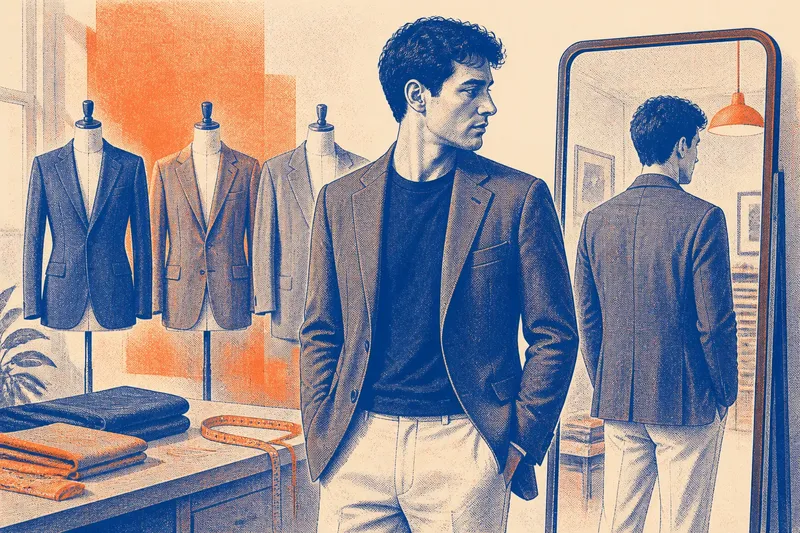
A jacket’s shoulder line can make the same outfit look crisp, relaxed, or slightly borrowed. To judge a jacket shoulder line, look first at where its seams sit, then at how the fabric extends or falls from them. Padding and cut refine that outline, but neither can disguise a shoulder that is fundamentally the wrong shape for the garment.
Start with the shoulder outline you want
The shoulder is a visual starting point for the jacket’s upper half. A defined edge gives the torso a clear frame; a softer edge lets the fabric follow the body more gently. Neither effect is inherently more flattering. The useful question is whether you want the jacket to look structured, easy, or deliberately oversized.
For a sharper outline, look for a shoulder seam near the point where your shoulder turns into your upper arm, with enough support to keep the sleeve head from collapsing. For a relaxed outline, choose a softer construction and a seam that can sit slightly beyond that point without leaving a stiff ridge. A strongly extended shoulder adds width to the jacket’s silhouette, even if the rest of the garment is narrow.
Say you want a jacket for a plain crewneck and straight-leg pants, and you prefer a clean, squared upper outline. A lightly padded jacket with a seam close to your shoulder edge would likely suit that aim better than a loose, dropped-shoulder style. The expected visible result is a more defined frame, not a different body shape.
Choose seam placement for your situation
Seam placement is easiest to read in a mirror from the front and side. Find the shoulder’s outer point, then see where the sleeve joins the body. The seam is not always visible on relaxed styles, so use the change in fabric direction or the sleeve’s attachment as a guide.
- If you want a conventional fitted outline: Choose a seam that meets the shoulder’s outer point or sits close to it. The sleeve should fall without pulling across the upper arm or forming a hollow below the seam.
- If you want an oversized outline: A seam below the shoulder point can work, especially when the sleeve and body are cut to accommodate it. The drop should look intentional rather than like a fitted sleeve has slipped out of place.
- If you want a narrow, soft outline: Look for a close seam and little or no visible padding. A soft sleeve head follows the shoulder more than it projects from it.
- If you want extra visual width: A more extended shoulder can create a longer horizontal line. Check the whole jacket, since a broad shoulder combined with a narrow body may feel sharply top-heavy.
Do not judge the seam in isolation. A jacket can have a correctly placed shoulder seam and still pull because the chest or upper back is too tight. Likewise, a dropped seam can be part of a balanced design if the sleeve is cut for it.
Read padding and cut together
Padding changes how firmly the shoulder holds its outline. A thin pad can smooth the transition between shoulder and sleeve; a thicker one can create a more pronounced edge. The pad’s shape matters as much as its presence. A broad, firm pad can make a shoulder look squared, while a softer, narrower support may simply prevent the fabric from sagging.
The jacket’s cut determines where that support leads. A fitted body with a defined shoulder often reads as tailored. A relaxed body with the same shoulder structure can look more graphic and boxy. Meanwhile, an unpadded jacket with a straight, roomy cut may still look substantial because the fabric itself holds its shape.
Fabric also affects the result. A crisp, dense cloth can preserve a clean shoulder edge with modest support. A fluid fabric tends to fall closer to the body, while a bulky fabric can add volume at the sleeve join even without much padding. Check the jacket in motion as well as standing still: raising an arm or reaching forward can reveal whether the shoulder construction restricts you or shifts awkwardly.
Match the shoulder to the setting
What shoulder line works for a formal jacket?
For a formal setting, a defined shoulder with restrained padding often gives the jacket a clear outline without making the upper body look theatrical. Choose the degree of structure that feels consistent with the garment’s lapels, fabric, and overall cut.
Can a dropped shoulder look intentional?
Yes, if the body and sleeve are designed around the lower seam. The sleeve should hang in a continuous line, with no strained folds or excess fabric bunched at the underarm.
Should the shoulder seam sit exactly at the shoulder edge?
That placement is a useful reference for a conventional fitted jacket, not a rule for every style. A deliberate extension or drop can change the silhouette, provided the rest of the jacket supports that choice.
Can a tailor fix a jacket shoulder that looks wrong?
Minor adjustments may be possible, but shoulder alterations are complex because the sleeve, armhole, and jacket body meet there. Ask a qualified tailor to assess the construction before buying a jacket that needs substantial reshaping.
Use the fitting room to separate fit from style
When comparing jackets, try them over the kind of layer you expect to wear underneath. A thin shirt and a substantial sweater can change how the shoulder feels and how the sleeve hangs. Keep the jacket closed and open for a moment; a front that pulls may make the shoulders appear more strained than they are.
Look for signs of a mismatch. Diagonal creases running from the neck toward the sleeve can point to tension. A deep hollow beneath the shoulder seam may suggest excess width or a sleeve head that does not suit the body. A ridge at the sleeve join can come from firm padding or construction, so decide whether it looks like part of the design or an interruption in the line.
Also check the back. If the cloth drags across the shoulder blades when your arms rest naturally, the jacket may be too narrow there. If it hangs in excess folds, the back or shoulder width may be too generous. The shoulder line should look deliberate from behind, not merely convincing in a front-facing mirror.
Let the intended silhouette make the decision
Choose the shoulder that supports the jacket’s job. For a clean, tailored impression, start with a close seam and controlled structure. For an easy, roomy impression, look for a softer build or a purposeful drop. If you want visible width, choose extension knowingly and balance it against the jacket’s body and sleeves.
Read the label and follow the maker’s care instructions, especially when the jacket contains internal structure that may be affected by pressing or cleaning. For fit, the practical test is simpler: the shoulder should create the outline you want while allowing ordinary movement. A good jacket does not need to erase your shape; it needs to make its own shape look intentional.
When choosing a jacket shoulder line, decide first whether you want definition, softness, or width, then assess seam placement and padding against that aim. That order makes it easier to distinguish a deliberate silhouette from a fit problem—and easier to leave the wrong jacket on its hanger.